Why soft launches matter
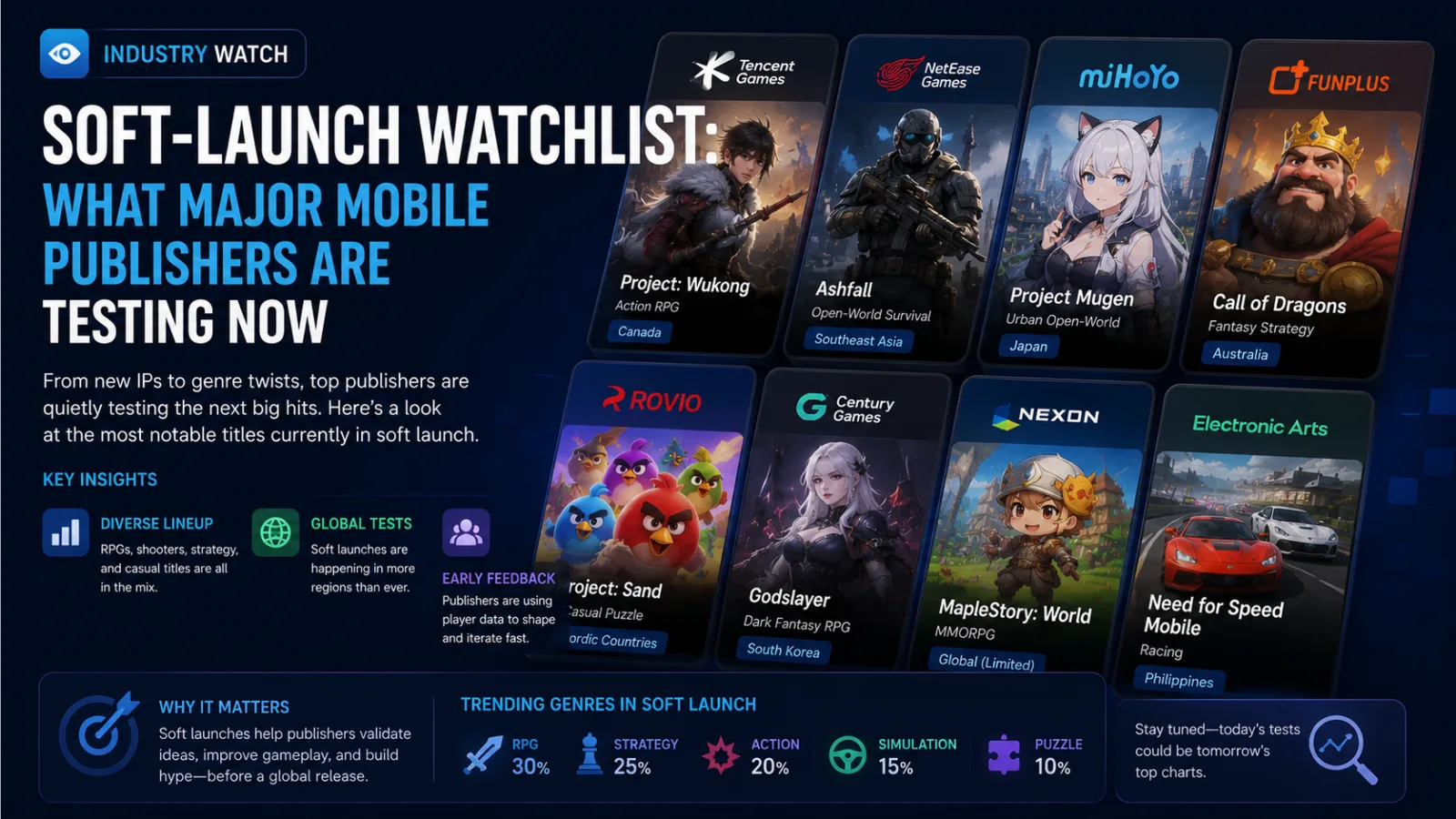
Soft launches are where mobile games quietly prove whether their ideas work. Before a global release, developers can study onboarding, technical stability, session length, and the way players respond to early progression.
For readers, these tests are useful signals. They show which genres publishers are actively exploring and which mechanics are being refined before wider release.
Genre patterns
The current testing slate is broad: top-down hero shooters, farming and decorating hybrids, match-based puzzle games, baseball adaptations, tower defense card projects, and fantasy squad battlers all appear in regional testing.
That variety suggests publishers are no longer focusing on one narrow template. Instead, they are mixing familiar loops with recognizable brands, social hooks, and shorter session structures.
Player expectations
Anyone trying a soft-launch game should expect rough edges. Performance, balance, translation, tutorial flow, and content pacing can all change before global release.
The better question is whether the core idea already feels clear. If a test build communicates its loop quickly and respects the screen, it has a stronger foundation to improve from.
ArcadeLens verdict
Soft-launch coverage is less about hype and more about pattern recognition. It helps players and editors understand where mobile design is moving before the biggest announcements arrive.
The most promising tests are not always the loudest ones. They are the games that combine a readable core loop with enough flexibility to become better through iteration.