Why it matters
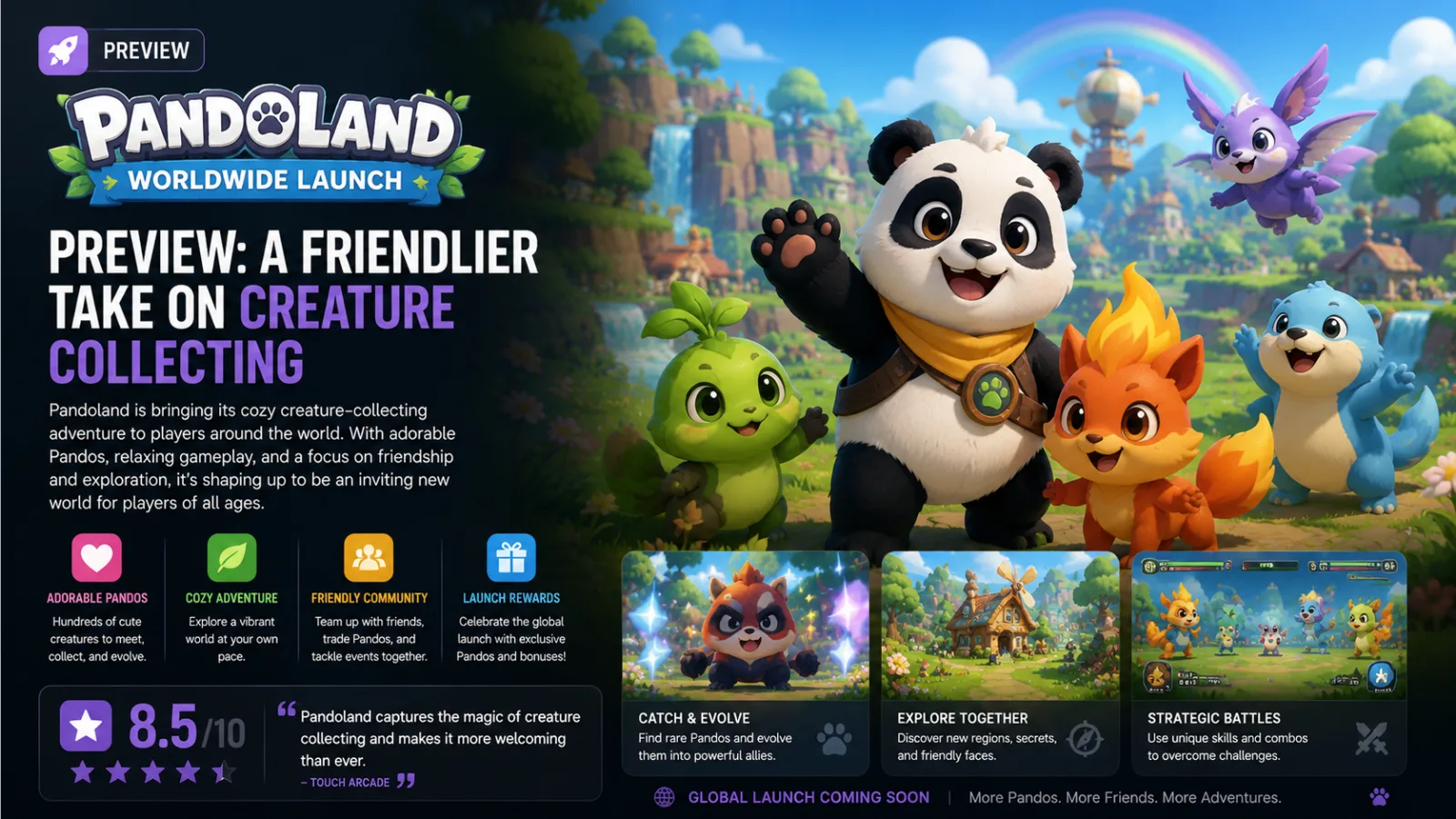
Pandoland stands out because it aims for the middle ground between casual adventure and collection-driven RPG. Instead of asking players to memorize complex builds immediately, it frames progress around exploration, treasure hunting, and expanding a team of companions.
That positioning could help the game reach players who enjoy creature collecting but want a lighter tone than many large-scale mobile RPGs provide.
Player experience
The core promise is easy to understand: explore islands, meet companions, strengthen a party, and move through action-based encounters at a manageable pace. If the interface supports that loop cleanly, Pandoland could become a comfortable daily RPG rather than a demanding second job.
Co-op support is also important. Mobile RPGs benefit when social systems feel optional but useful, giving players a way to share progress without forcing constant coordination.
Design questions
The key question is how the collection system is balanced. A roster of hundreds of companions sounds generous, but it needs sorting, upgrading, and team-building tools that remain readable on a phone.
The game also needs to show meaningful differences between companions early. If characters feel interchangeable for too long, the collecting hook loses some of its personality.
ArcadeLens verdict
Pandoland looks like a mobile RPG to watch because it understands the value of approachability. Its success will depend less on scale and more on how well it turns exploration and team growth into a clear handheld routine.
Players who enjoy light adventure, collection goals, and flexible multiplayer should keep it on their radar, especially if the worldwide release keeps the early game friendly.